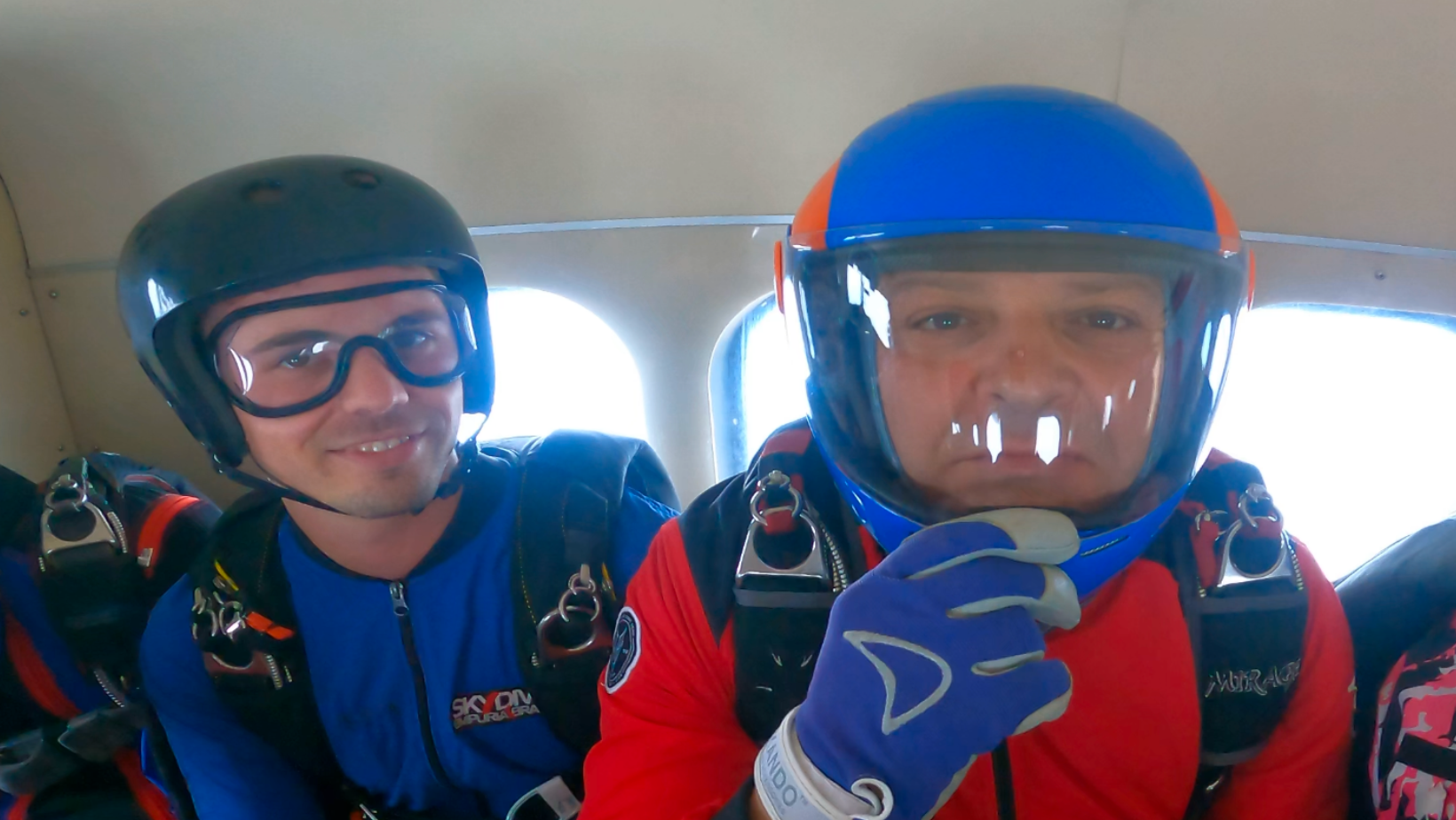
“When you’re falling at more than 200 km/h, how do you know when it’s time to open your parachute?”
You check your altimeter. In skydiving, altitude is much more important than how long you’ve been falling. An altimeter measures how high you are above a reference level, usually using changes in air pressure. As you descend, the pressure increases, and the device converts that change into an altitude reading. Why not simply count the seconds? Because freefall time can vary depending on exit altitude, body position, and air resistance. Two jumps that feel almost identical can have different descent rates — and guessing is not a great safety strategy when you’re thousands of metres above the ground.
As well as the helmet, the altimeter is one of the main skydiving accessories.
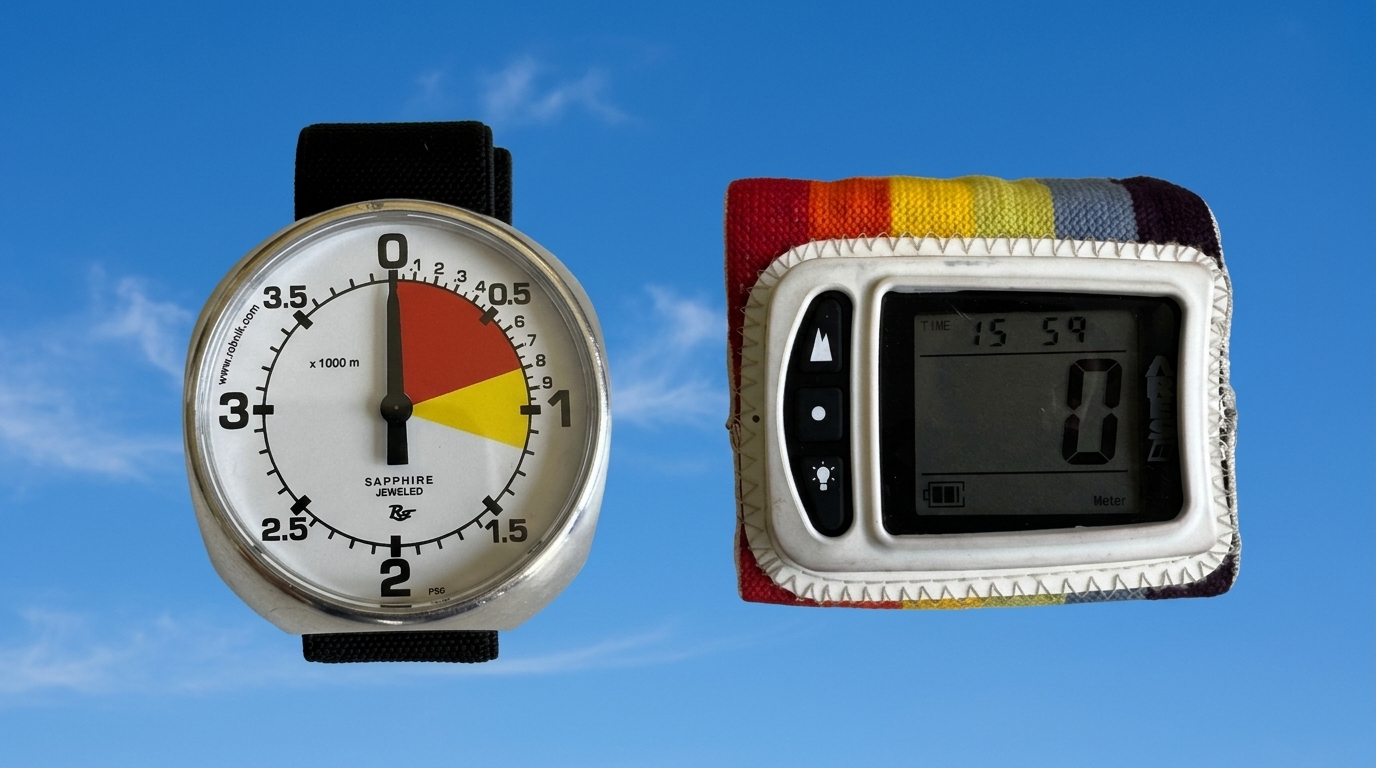
Altimeters for beginners feature a large dial with clear numerals, divided into 500-meter sectors. According to the manufacturer, Alti-2, the yellow and red zones on the dials of analog altimeters Altimaster devices feature warning markers for approaching the ground. The yellow zone, from 1200m to 800m, indicates the altitude at which a parachute should already be deployed, allowing time to deploy a reserve if there is an issue with the main canopy, or, if possible, to resolve the problem before reaching the red zone, which warns of even greater proximity to the ground.
Visual or audio altimeters – what is the difference?
Most skydivers use a visual altimeter, worn on the wrist or hand, where they can glance at it during the jump. Some display altitude with a traditional needle, while digital models show the reading on a screen in feet or metres. But looking at your wrist isn’t always convenient when you’re busy flying with other people or controlling your body position. That’s where an audible altimeter comes in: a small electronic device fitted inside the helmet that plays beeps or spoken alerts at preset altitudes. For example, the LB Altimeters QUATTRO offers multiple warning settings for different phases of flight, while the VOG takes a different approach and announces altitude aloud. It’s a little like having a co-pilot in your helmet — one that doesn’t complain about your playlist.
So why use more than one altimeter?
Because each provides information in a different way: you can read the visual display, listen for an audible warning, and maintain awareness of your surroundings. Experienced skydivers often combine these sources to build a more complete picture of their altitude, rather than relying on a single device. Of course, an altimeter is an aid, not a substitute for proper training, good decisions, and following established procedures. Models differ in their features: for instance, the LB Altimeters SOLO II offers three selectable warning altitudes, while the VOG can be configured through a smartphone app and supports different languages. The goal is simple: know your altitude, stay aware, and make decisions based on the right information.
Because at 200 km/h, “I think we’re about due” is not a particularly impressive piece of aviation technology.