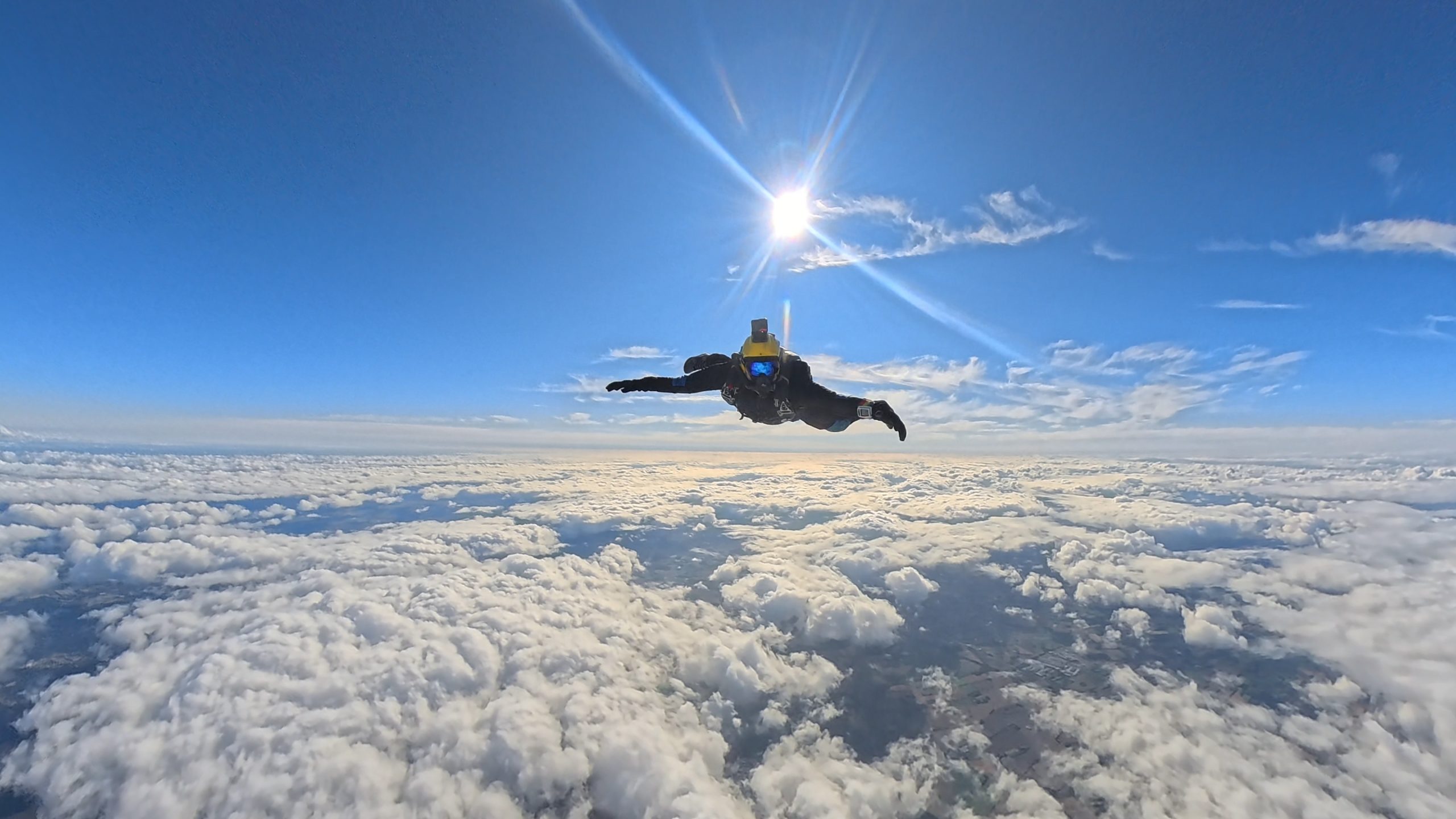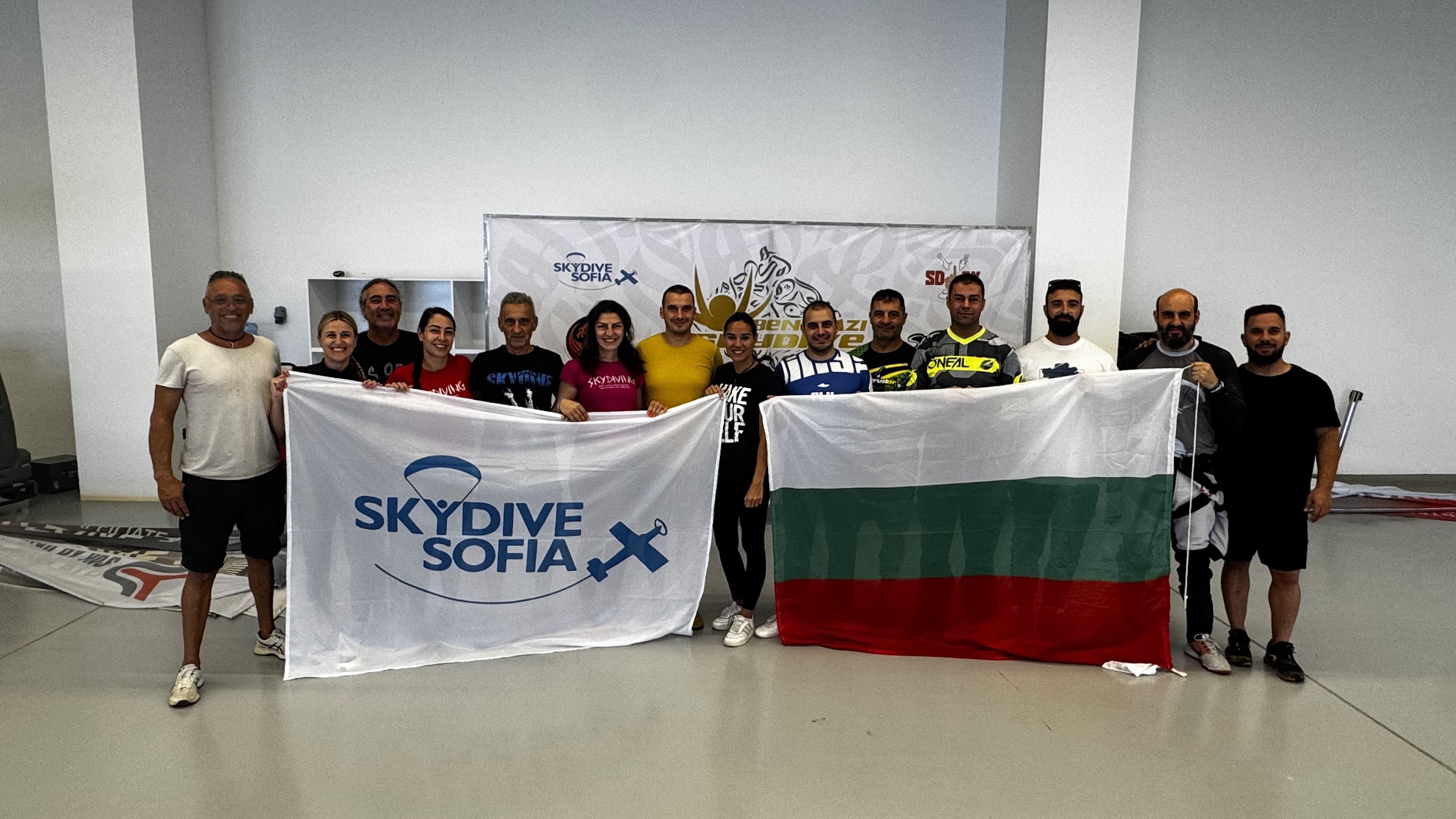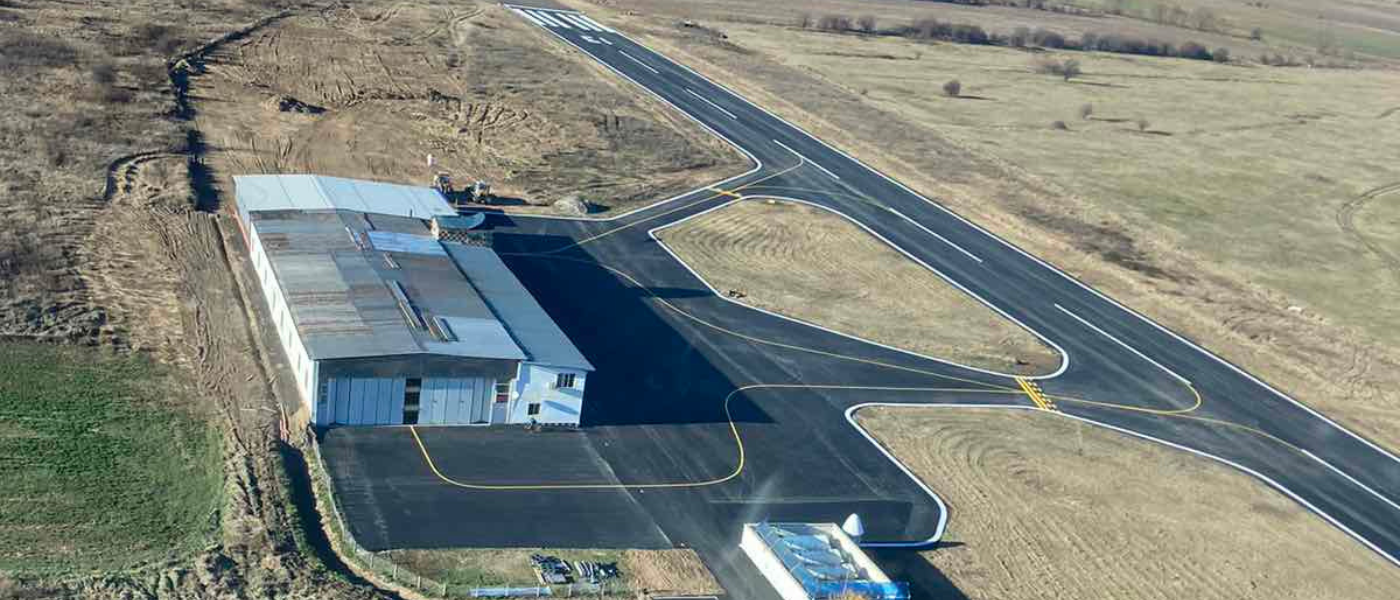
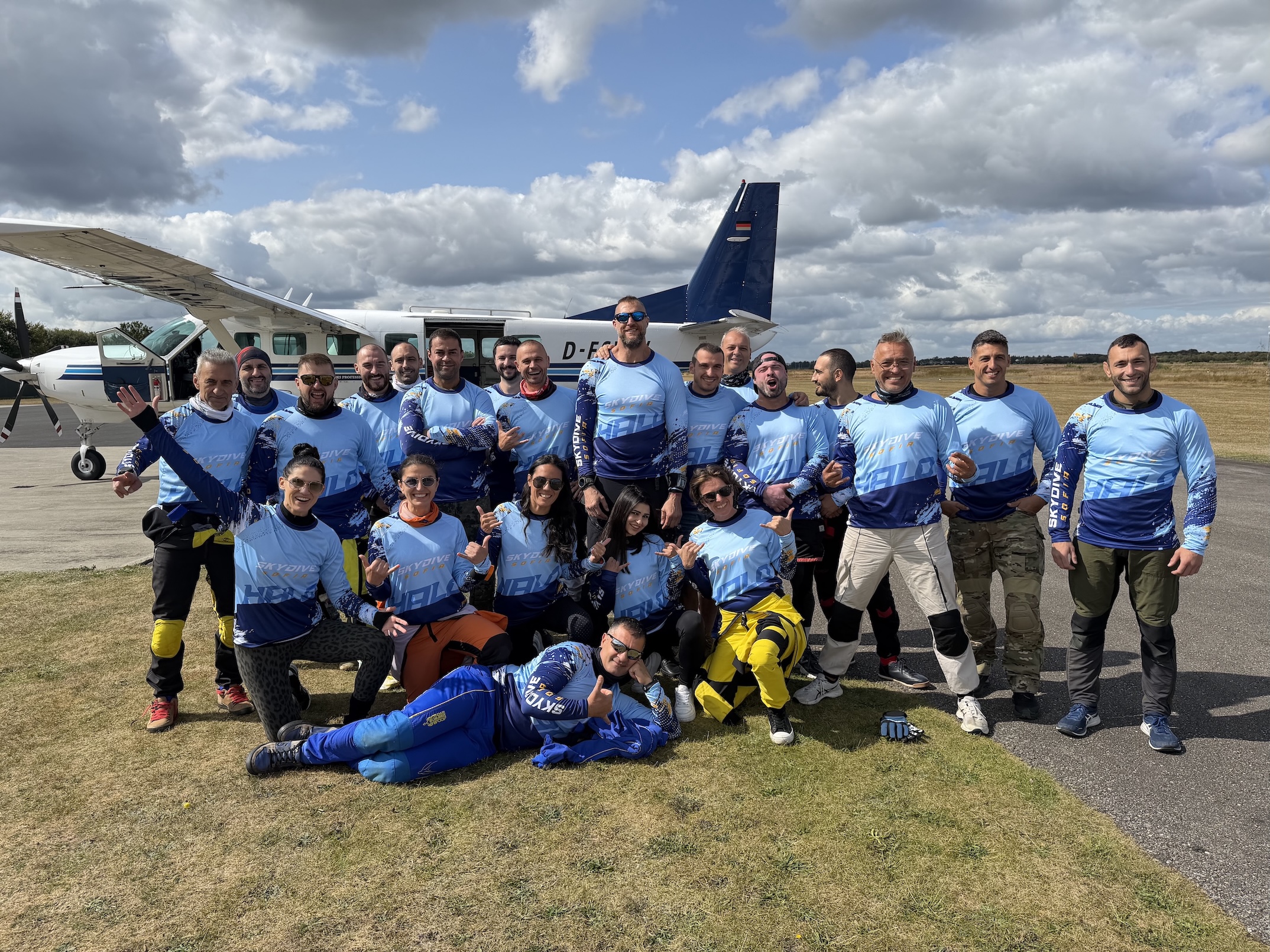
24 skydivers from Skydive Sofia had the opportunity to take part in a HALO jump from 25,000 ft during our latest skydiving camp in Denmark. Organised at an altitude rarely experienced by civilian skydivers, the jump was the highlight of several days at Dropzone Denmark filled with skydives, training and time spent together.
What is a HALO jump?
HALO (High Altitude, Low Opening) stands for “High Altitude, Low Opening” — a skydive from a significantly higher altitude than a standard jump, with the parachute deployed at a normal opening altitude.
The result is a much longer freefall, lasting around two minutes.
Preparing for the jump
The HALO experience started long before anyone stepped out of the aircraft.
The jump was operated from the familiar Cessna 208, also used for regular skydiving operations at Dropzone Denmark. The difference was before the climb to almost 8,000 metres — and everything that comes with operating at that altitude.
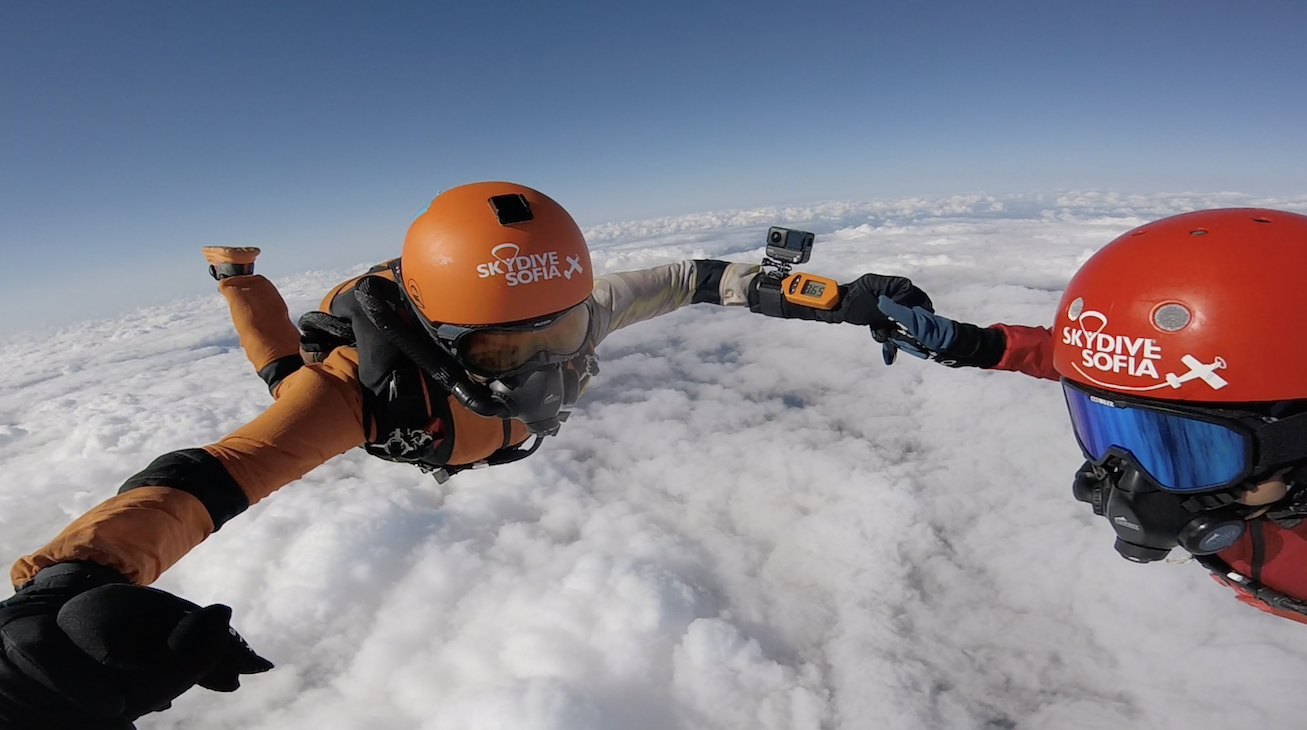
At 25,000 ft, the air is significantly thinner and oxygen levels are much lower than at standard skydiving altitudes. That is why HALO jumps require a specialised oxygen system, designed for high-altitude skydiving by the team at HALO2Skydive.
The system provides oxygen during the climb and freefall, while the standard skydiving equipment is supplemented with specialised high-altitude gear, including an oxygen mask, specialised helmets and goggles, and additional warm clothing.
Before the flight, all participants went through a detailed briefing and preparation. The equipment was checked repeatedly — by at least two HALO experts before boarding and again during the flight by two operators on board.
Their role included managing the oxygen system connected to the aircraft and ensuring that each jumper switched to their own oxygen supply immediately before exit.
The climb to 25,000 ft took around 25 minutes. Outside the aircraft, temperatures ranged from -38 to -31°C.
Then came the part everyone had been waiting for: more than two minutes of freefall, with speeds reaching between 280 and 500 km/h depending on the individual skydiver and their flying style.
More than HALO
The HALO jump may have been the highlight of the camp, but it was far from the only experience.
Over the other days at Dropzone Denmark, the programme included formation skydives, relative work, tracking and wingsuit jumps, along with dedicated training sessions focused on developing skills and improving technique.
As with all our camps, everyone came with their own goals — from working on specific skills to simply getting more time in the air, having fun and enjoying the opportunity to jump together.
When skydiving brings people together
One of the most valuable parts of a skydiving camp is not just what happens in the air, but the time we get to spend together on the ground as well.
Different levels of experience. Different goals. Different personalities. One shared passion.
That is what makes the Skydive Sofia sky family special.
The 25,000 ft HALO was the big challenge of this camp. Everything around it — the jumps, the training, the shared evenings, the laughter and the time spent together — was what made the experience complete.
And that is why we keep organising camps like these: to try something new, develop our skills, challenge ourselves and, most importantly, share skydiving as a community.